


Modern point-of-sale (POS) systems have evolved far beyond the simple cash registers of the past. In addition to processing payments, modern POS systems enable businesses to centralize sales data, manage inventory, and personalize the customer experience.
Whether a business operates across multiple locations and channels or through a single local storefront, the right POS setup helps drive growth by connecting these areas.
Looking ahead, the future of POS systems is being shaped by advances in embedded payments, cloud-based architecture, biometric security, and AI-driven automation. For businesses ready to modernize their operations, understanding where POS technology is headed is an important first step.
Key takeaways
- Modern POS systems are integrated platforms that connect payments, operations, and customer data.
- Cloud-based, mobile, and modular POS architectures give businesses greater flexibility in their operations.
- POS systems that support diverse payment methods and intelligent, data-driven features improve business efficiency and deliver more seamless customer experiences.

What are POS systems?
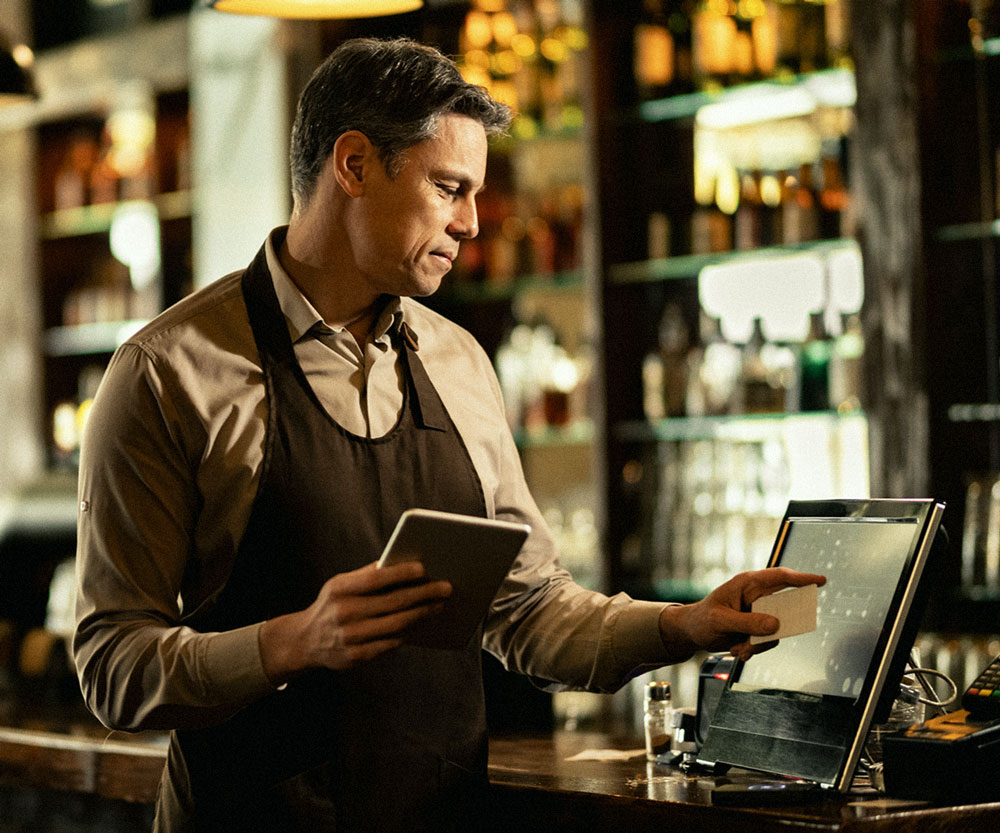
A POS system is the technology businesses use to complete customer transactions. POS setups typically include hardware — like a register and card reader, now often combined into a single tablet — and software that enables staff to search inventory and process transactions.
However, many modern POS systems also offer operational tools like automated inventory tracking or insights on employee performance. For example, a POS system might automatically update inventory levels after each sale or generate analyses of employee sales and hours worked.
Additionally, POS systems play an important role in the customer experience. Beyond making checkout more efficient for both in-store and online purchases, they capture customer transaction data that businesses can use to understand purchasing patterns or support loyalty programs and targeted promotions.
The future of POS systems
Advances in POS technology are giving businesses more control over how they accept payments and manage day-to-day operations.
Here are some key developments to be aware of:
1. Rise of cloud-based and hybrid POS architecture
Cloud-based POS architecture is becoming the foundation of modern point-of-sale systems, giving businesses real-time, remote visibility into sales, inventory, and performance across locations. Market growth reflects just how quickly this shift is happening. According to Grand View Research, the global cloud point-of-sale market is projected to reach nearly $15 billion by 2030, up from just under $5 billion in 2023.
Beyond scalability, cloud-based POS systems also help reduce infrastructure costs and simplify deployments as businesses grow. Some organizations are adopting hybrid POS models, combining cloud software with local hardware to balance flexibility with reliability, particularly in environments where uptime and offline functionality remain critical.
2. AI-driven insights and automated decision-making
POS systems increasingly embed artificial intelligence in their platforms to provide businesses with transaction and operational analysis. These AI-driven insights are useful for monitoring sales trends and product performance.
For example, a retailer might adjust staffing based on predicted traffic or reorder products earlier to avoid anticipated stockouts. AI insights can also help you automatically offer targeted recommendations to customers, such as suggesting complementary products to the items in their cart.
3. Growing adoption of mobile and tablet-based POS
Checkout is no longer confined to a counter. Mobile POS and tablet-based POS devices allow staff to support customers anywhere, such as closing out a tab tableside or assisting customers on the sales floor.
Mobile and tablet-based POS systems also support non-traditional environments like pop-up locations or curbside pickup. This flexibility makes it easier for staff to assist customers quickly and offer a smoother experience.
4. Embedded payments becoming the default experience
Many POS systems now include embedded payments, meaning payment processing is built directly into the POS software. As a result, businesses can reduce dependence on separate payment systems and unify sales, payments, and reporting in one platform.
For example, when a merchant accepts credit card or digital wallet payments through the POS, each transaction is automatically reflected in sales records. This simplifies day-to-day operations by reducing system complexity and providing a unified view of transactions.
5. Biometric authentication and advanced security layers
Biometric authentication is gaining traction as an efficient way to manage employee access within POS systems. Rather than relying on shared PINs or passwords, staff can use fingerprints or facial recognition to log in, clock in and out, or approve refunds and overrides.
Other advanced security measures, like multi-factor authentication, can also help protect POS systems from fraud and unauthorized use. When implemented strategically, these layered controls help businesses bolster protection without adding friction for employees.
6. Personalization powered by real-time customer data
Modern POS systems capture valuable customer data at the moment of purchase, enabling brands to personalize interactions in real time. By analyzing customer behavior, POS systems can recognize returning customers during checkout and activate relevant offers or recommendations.
For example, a POS system might automatically apply a loyalty discount or suggest a relevant add-on at checkout based on past purchases, helping reinforce customer relationships and encourage repeat business.
7. Expansion of alternative payment methods
Many POS systems are expanding support for alternative payment options beyond traditional cash and cards. This includes digital wallets, contactless payments, Buy Now, Pay Later (BNPL) plans, and other payment methods for in-store and e-commerce transactions.
By offering diverse payment options through a POS system, businesses simplify the purchasing process for customers, which drives higher conversion rates.
8. Automation and self-checkout innovations
Self-checkout POS systems are making checkout faster and more convenient for customers and staff. Rather than waiting in line for a cashier, customers can scan items and pay on their own using kiosks or mobile devices.
In environments like retail or quick-service restaurants, self-checkout can create a faster experience for customers while freeing staff to focus on other priorities. Behind the scenes, other POS automation innovations, such as real-time inventory tracking and automated reporting, help businesses keep operations running smoothly on the back end.
9. Modular POS systems built for scalability
With modular POS systems, businesses can scale their technology over time and add new capabilities only when necessary.
For example, a local coffee shop might start with a tablet for in-store checkout and card payments. As it grows, it can add software for online ordering or more advanced sales reporting without replacing its POS system entirely.
10. Sustainability and energy-efficient POS hardware
Sustainability is becoming a focus in POS hardware design. Along with cloud-based POS software that reduces reliance on on-site servers, POS systems built with sustainability in mind are often made with recyclable materials and may use low-power processors or LED displays to minimize energy use. POS systems that support paperless transactions through text or email receipts also help businesses and their customers reduce waste.
Preparing your business for the future of POS systems
As POS technology evolves, businesses are finding new opportunities to streamline checkout and gain visibility into their business. To truly drive growth and keep pace with customer demand, choosing a flexible and scalable POS system is essential.
Priority Commerce’s MX™ POS solutions are built to be fully customizable and tailored to your business needs. With easy implementation, cloud-based access, and real-time analytics and reporting, you can build a POS system that is better for guests, operations, employees, and the growth of your business.